iPhone Pro/Pro Max series (e.g., iPhone 12 Pro and above) are equipped with high-end screen technologies such as ProMotion adaptive refresh rate, True Tone display, and deep Face ID integration. In the second-hand market, the identification difficulty, repair cost, and failure risk of such screens are higher than those of regular models. Mastering the exclusive identification methods, function calibration skills, and repair cost optimization strategies for high-end screens can avoid misjudgments caused by technical differences and ensure the user experience and residual value of flagship models.
Core Technical Differences of High-End Screens
(Why Pro Series Screens Are Harder to Identify)
Compared with regular iPhone models, Pro/Pro Max screens feature multiple exclusive technologies, which are also key difficulties in second-hand identification and usage:
Refresh Rate
Pro/Pro Max Series (High-End Screen): 120Hz ProMotion adaptive refresh rate (10-120Hz dynamic adjustment)
Regular iPhone Series (Basic Screen): 60Hz fixed refresh rate
Core Difficulties in Second-Hand Identification: High-refresh screens are easily replaced with 60Hz screens, which are indistinguishable to the naked eye and require professional testing.
True Tone Display
Pro/Pro Max Series (High-End Screen): Second-generation True Tone sensor (higher precision, more natural color adaptation)
Regular iPhone Series (Basic Screen): First-generation True Tone sensor
Core Difficulties in Second-Hand Identification: Non-original screens may support "fake True Tone" and require calibration verification.
Touch Technology
Pro/Pro Max Series (High-End Screen): High-speed touch linked with ProMotion (response delay < 10ms)
Regular iPhone Series (Basic Screen): Regular touch (response delay ≈ 15ms)
Core Difficulties in Second-Hand Identification: Small differences in touch delay require special testing tools for verification.
Face ID Integration
Pro/Pro Max Series (High-End Screen): Deep binding between screen sensor area and Face ID algorithm
Regular iPhone Series (Basic Screen): Basic sensor integration
Core Difficulties in Second-Hand Identification: Non-original or low-quality assembled screens may block sensors or have poor compatibility, causing Face ID failure.
Screen Material
Pro/Pro Max Series (High-End Screen): Ceramic Shield front cover (higher hardness, improved drop resistance)
Regular iPhone Series (Basic Screen): Regular glass front cover
Core Difficulties in Second-Hand Identification: Refurbished screens may be replaced with regular glass, requiring hardness testing for distinction.
Display Parameters
Pro/Pro Max Series (High-End Screen): Peak brightness 1000 nits (HDR), 2000 nits (outdoor)
Regular iPhone Series (Basic Screen): Peak brightness 600-800 nits
Core Difficulties in Second-Hand Identification: Non-original screens falsely mark brightness and require professional equipment for measurement.
Core Conclusion: Technical differences between high-end and regular screens cannot be directly judged by the naked eye. Combined special tools and precise testing are necessary to avoid purchasing "downgraded screens" (e.g., 120Hz screens replaced with 60Hz).
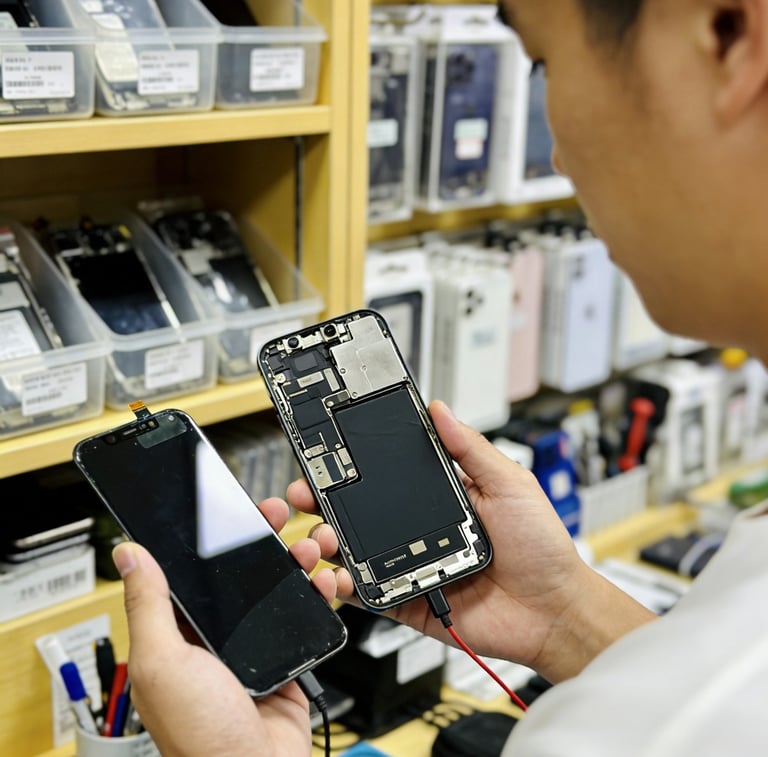
Exclusive Identification Methods for High-End Used Screens
(Module-by-Module Operation)
Targeting the core technologies of Pro series screens, a two-layer identification system of "basic testing + professional verification" is designed to cover all key dimensions:
1. ProMotion Display Identification (Most Prone to Counterfeiting, Key Verification)
Basic Testing (No Tools Required, Suitable for All Users):
① Smooth Sliding Comparison: Open WeChat Moments/webpages and slide up and down quickly. 120Hz screens slide without ghosting or lag, while 60Hz screens have slight ghosting (comparable with known 60Hz models);
② Dynamic Refresh Rate Observation: Enable "Settings-Accessibility-Motion-Reduce Motion-Limit Frame Rate". Sliding smoothness should decrease significantly after activation (proving the original screen supports high refresh). If there is no difference before and after activation, it is a 60Hz screen;
③ Video Testing: Play 120fps high-definition videos (e.g., "120Hz Test Videos" on Bilibili). 120Hz screens can display high frame rates normally (smooth images), while 60Hz screens force frame reduction (stuttering images).
Professional Verification (100% Accuracy, Suitable for Rigorous Users):
① Recommended Tools: iMazing (computer terminal), Refresh Rate Analyzer (mobile APP);
② Operation Steps:
iMazing: After connecting the phone, enter "Hardware-Screen" and check the "Refresh Rate" parameter. "10-120Hz" indicates an original high-refresh screen, while "60Hz" indicates a downgraded screen;
Refresh Rate Analyzer: After opening the APP, the screen displays real-time refresh rate. The refresh rate should fluctuate between 80-120Hz when sliding and drop to 10-30Hz when stationary (adaptive feature).
Pitfall Reminder: Some third-party merchants use "software disguise" to make 60Hz screens display "120Hz" logos. Confirm with hardware testing (iMazing parameters) to avoid being deceived by software.
2. Precise Identification of True Tone Display (2nd Generation) (Avoid "Fake True Tone")
Core Difference Between Regular and Fake True Tone: The original second-generation True Tone can accurately adjust color temperature (3000K-6500K) according to ambient light, while fake True Tone can only switch between two fixed modes ("warm/cold") without gradient effects;
Identification Steps:
① Basic Testing: Observe screen color temperature under different ambient lights (indoor incandescent lamps, outdoor sunlight, dark night). Original True Tone transitions smoothly (e.g., cool-toned texts in sunlight, warm-toned texts under lamps), while fake True Tone switches abruptly;
② Professional Calibration Testing:
Tool: ColorMeter (mobile color temperature testing APP);
Operation: Under incandescent light (color temperature ≈3000K), the screen color temperature should be close to 3500K-4000K after enabling True Tone. Switch to sunlight (color temperature ≈6500K), and the screen color temperature should be close to 5500K-6000K. Fake True Tone cannot achieve precise matching.
Repair Tip: If the original screen's True Tone fails (non-hardware damage), it can be repaired by "resetting the sensor": Settings-General-Transfer or Reset iPhone-Reset-Reset All Settings. Restart the phone and let it stand in sunlight for 5 minutes; the True Tone function may be restored.
3. Identification of Ceramic Shield vs. Regular Glass (Avoid Material Replacement)
Core Difference: Ceramic Shield has higher hardness (Mohs hardness 7-8, close to sapphire), while regular glass has a hardness of only 5-6, which is prone to scratches;
Identification Methods:
① Hardness Test (Proceed with Caution): Gently scratch the screen edge (non-display area) with a coin (copper, hardness 3). Ceramic Shield shows no scratches, while regular glass leaves obvious scratches;
② Transmittance Test: Adjust the screen brightness to the maximum and display a pure white background. Ceramic Shield has a transmittance ≥92% (transparent images without whitening), while regular glass has a transmittance ≤85% (slightly grayish images);
③ Drop Resistance Verification (Indirect Judgment): Check the phone's repair records (via Apple Support APP). If the phone was dropped but the screen is intact, it is likely an original Ceramic Shield (regular glass is easily broken).
4. Face ID and Screen Sensor Compatibility Identification (Key Pitfall Avoidance for Pro Series)
Failure Risk: The screen sensor of Pro series is more closely bound to the Face ID module. Non-original or low-quality assembled screens may cause Face ID failure, unlock delay, or misidentification;
Identification Steps:
① Basic Function Test: Unlock Face ID 10 consecutive times and observe if all unlocks are fast (<0.5 seconds) without delay or failure;
② Extreme Scenario Test: Test Face ID in low-light (dark night), strong light (outdoor noon), and side-light environments. The original screen + sensor should have no unlock failures;
③ Professional Verification: Query "Sensor Status" with iMazing. "Face ID module matches screen sensor" indicates normal operation, while "mismatch" indicates a non-original screen or sensor replacement.
Pitfall Reminder: If the merchant claims "original screen but Face ID failure", the sensor is likely damaged during screen replacement. Such phones should be avoided (high repair costs and potential irreversible damage).
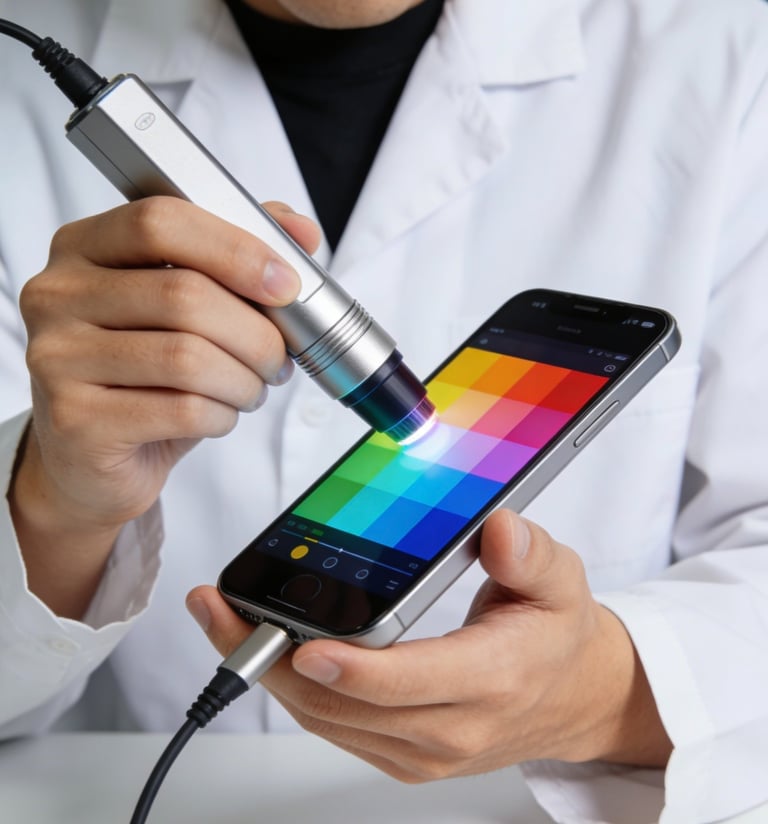
The repair cost of original Pro series screens is extremely high (e.g., over 3000 RMB for official screen replacement of iPhone 15 Pro Max). Choose the optimal repair plan based on usage needs:
1. Comparison of Different Repair Plans (Taking Pro Max Models as Examples)
Official Repair Plan
Screen Type: Apple original brand-new screen
Price Range (Including Installation): 2500-3500 RMB
Core Advantages: 100% original, 90-day warranty, full compatibility with Face ID/ProMotion/True Tone
Risk Points: Extremely high price
Adaptation Scenarios: Users pursuing the ultimate experience with sufficient budget
High-Quality Third-Party Repair Plan
Screen Type: Original used ProMotion screen (above 95% new)
Price Range (Including Installation): 1500-2200 RMB
Core Advantages: Retains original core technologies (ProMotion/True Tone), 30% cheaper than official
Risk Points: Need to verify no burn-in/dead pixels
Adaptation Scenarios: Users pursuing original experience with medium budget
Cost-Effective Third-Party Repair Plan
Screen Type: First-tier brand Pro-level high-refresh screen (e.g., Pisen Pro)
Price Range (Including Installation): 1000-1500 RMB
Core Advantages: Supports 120Hz ProMotion/True Tone, 1-year warranty, strong compatibility
Risk Points: Peak brightness slightly lower than original (≈900 nits)
Adaptation Scenarios: Long-term personal use, valuing cost-effectiveness
Temporary Transition Repair Plan
Screen Type: Second-tier brand 60Hz screen
Price Range (Including Installation): 600-900 RMB
Core Advantages: Low price, basic normal display/touch
Risk Points: No ProMotion, limited True Tone, significant residual value impact
Adaptation Scenarios: Short-term use (<6 months), planning to replace the phone
2. Repair Cost Optimization Tips
Prioritize "original used screens": 1000+ RMB cheaper than official new screens, while retaining all high-end functions, suitable for users planning long-term use;
Avoid "official screen replacement + extended warranty" packages: Official extended warranty costs about 500 RMB. Purchase third-party screen insurance independently (e.g., Alipay screen insurance, annual premium 100-200 RMB) for higher cost-effectiveness;
Bulk repair is more cost-effective: If both the screen and battery need replacement, choose a "screen + battery" combination package (200-300 RMB cheaper than separate repairs) to avoid secondary disassembly damage.
3. Key Selection Decision Points
If the phone's battery health is >85% and only the outer glass is damaged: Choose "outer glass replacement" (cost 500-800 RMB) to retain the original inner screen (ProMotion/True Tone module) for the highest cost-effectiveness;
If the inner screen is damaged (display abnormalities/touch failure): Resolutely choose a screen that supports ProMotion (60Hz screens will significantly reduce user experience and decrease residual value by 50%+);
If planning to resell within 1 year: Prioritize official screens or original used screens. The residual value only decreases by 10%-15% when resold, while non-original screens decrease by 30%+.
Long-Term Usage and Value Preservation Skills for High-End Screens
(Extend Lifespan + Improve Resale Value)
1. Exclusive Maintenance Habits (Targeting High-End Technical Features)
ProMotion Screen Protection: Avoid displaying the same screen at fixed high brightness (>70%) for a long time (e.g., navigation, video player interfaces), which will accelerate OLED screen burn-in (ProMotion screens have a 30% higher burn-in risk than 60Hz screens);
Ceramic Shield Protection: Despite high hardness, still wear a tempered film (choose a 0.15mm thick high-definition film that does not affect touch sensitivity) to avoid scratches from sharp objects (e.g., keys, gravel);
True Tone Sensor Protection: Avoid wiping the top sensor area with alcohol or cleaning agents, which will corrode the sensor coating and cause True Tone failure.
2. Regular Calibration and Testing (Once Every 3 Months)
ProMotion Calibration: Test the refresh rate with Refresh Rate Analyzer. If the refresh rate is consistently below 80Hz when sliding, it may be a system bug or hardware failure. Restart the phone or contact repair;
True Tone Calibration: Test the color temperature with ColorMeter. If the color temperature does not respond to ambient light changes, reset True Tone (refer to previous methods) or test the sensor;
Touch Calibration: Perform "Touch Sensitivity Test" in Settings-Accessibility-Touch-Touch Accommodations to ensure touch delay <10ms in ProMotion mode.
3. Resale Value Preservation Strategy
Retain Repair Vouchers: If the screen has been replaced, keep repair records from official/regular stores (including screen serial number and installation certificates) to prove the screen is original or a high-quality third-party screen when reselling;
Pre-Resale Testing and Minor Fault Repair: Generate a screen test report with iMazing (including refresh rate, True Tone, and touch parameters) before resale. Repair minor scratches (apply a new tempered film) to increase the resale price by 10%-20%;
Highlight High-End Function Integrity: Clearly mark "original ProMotion screen, normal True Tone, instant Face ID unlock" in the resale description, and attach test videos to attract quality buyers and achieve premium resale.