
The screen condition of a used iPhone is one of the core factors affecting pricing. Screen defects (scratches, cracks, non-original) will directly lead to a decrease in residual value. However, many users do not know how to negotiate prices or evaluate residual value reasonably, making it easy to buy expensive or sell at a loss. Mastering the pricing rules for screen defects, bargaining skills in different scenarios, and residual value evaluation methods can help you accurately control prices in second-hand transactions, buy cost-effectively, and sell reasonably.
Pricing Rules for Used iPhone Screen Defects
(Clarify Discount Range, Avoid Blind Bargaining)
Different screen defects correspond to different discount ratios. Combined with market conditions and model positioning, general pricing rules are sorted out (taking iPhones without other hardware faults as examples):
Perfect Screen
Specific Description: Original screen, no scratches, no faults, normal display/touch.
Discount Ratio: 0% (Relative to Perfect Screen of the Same Model)
Notes: Highest residual value, no discount.
Minor Defects
Specific Description:
1. Superficial scratches (<1cm, no tactile feel);
2. Slight peeling of oleophobic coating (no impact on use).
Discount Ratio: 5%-10%
Notes: Small discount range, no impact on core experience.
Moderate Defects
Specific Description:
1. Obvious scratches (1-3cm, slight tactile feel);
2. Small outer glass cracks (<1cm, no touch/display issues);
3. Original repaired screen (good craftsmanship, no dust ingress).
Discount Ratio: 15%-25%
Notes: Affects appearance, no functional risks.
Severe Defects
Specific Description:
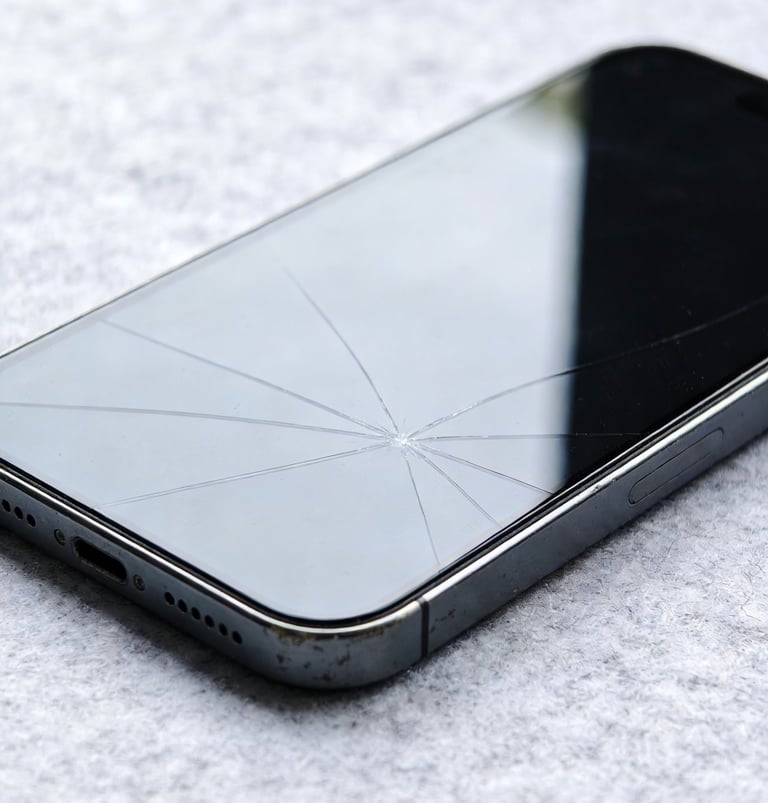
1. Large-area outer glass cracks (>3cm);
2. Slight display discoloration/dark corners;
3. Occasional touch unresponsiveness (edge areas);
4. Non-original first-tier brand screen (normal function).
Discount Ratio: 30%-45%
Notes: Affects user experience, requires subsequent maintenance.
Critical Defects
Specific Description:
1. Damaged inner screen (severe display abnormalities, touch failure);
2. Screen liquid ingress/corrosion;
3. Non-original no-name screen (limited functions).
Discount Ratio: 50%-70%
Notes: Requires screen replacement, residual value drops sharply.
Pricing Supplementary Notes:
The higher-end the model (e.g., iPhone 15 Pro Max), the larger the discount range for screen defects (the price difference between a perfect screen and a critically defective screen can reach over 2000 RMB);
Defects on original screens have lower discounts than non-original screens (for the same degree of scratches, original screens have a 10% discount, non-original screens have a 15% discount);
Non-original first-tier brand screens with normal functions have higher residual value than original screens with cracks (prioritize user experience).
Buyer's Bargaining Skills: Accurate Bargaining Based on Screen Defects
(Practical Methods for Different Scenarios)
Targeted bargaining according to the purchase scenario (online/offline) and screen defect type can increase the success rate by 60%:
1. Online Purchase Bargaining (No Physical Contact, Bargain with Evidence)
Core Logic: Find screen defects from pictures/videos provided by the merchant, propose a reasonable discount based on pricing rules, and attach defect screenshots as evidence;
Practical Script Templates:
① For Minor Scratches: "Boss, I can see a superficial scratch of about 1cm on the screen in the video (marked position in the screenshot). According to market conditions, there should be an 8% discount. The original price is 4500 RMB, can it be reduced to 4140 RMB?"
② For Non-Original Screens: "I have checked the screen with iMazing and found it is a third-party screen (as evidenced by the screenshot). Although the function is normal, the residual value is 20% lower than the original screen. The original price is 5000 RMB, please reduce it to 4000 RMB, and I will place the order immediately."
③ For Touch Unresponsiveness: "There is unresponsiveness at the screen edge in the test video (attached test clip), which is a severe defect with a 40% discount. The original price is 3800 RMB, I will take it for 2280 RMB."
Pitfall Avoidance Points: Request the merchant to provide a commitment of "no hidden screen defects", and agree that "if undisclosed screen issues are found within 7 days of receipt, return or price difference compensation is allowed".
2. Offline Purchase Bargaining (On-Site Verification, Bargain with Actual Tests)
Core Logic: Complete the full "appearance + display + touch" screen test on site (refer to Tweet 26), find defects not mentioned by the merchant, and stack discounts;
Practical Steps:
① First Check Appearance: Irradiate the screen with a strong light flashlight to find hidden scratches and fine cracks (merchants may deliberately cover them);
② Then Test Functions: Test touch edges, True Tone, and 3D Touch to find functional abnormalities or display discoloration;
③ Stack Bargaining: "Boss, the screen not only has a 2cm scratch (20% discount for moderate defects) but also slight discoloration (30% discount for severe defects). With stacked discounts of 45%, the original price is 4000 RMB, I will take it for 2200 RMB."
Negotiation Skills: First point out major defects and propose a basic discount, then supplement minor defects and request "additional concessions", which is easier for merchants to accept.
3. Bargaining Bottom Lines for Different Defects (Avoid Excessive Bargaining Leading to Transaction Failure)
Minor Scratches
Bargaining Bottom Line (Discount Ratio): 5%-8%
Negotiation Strategy: Small concession, quick transaction, no entanglement.
Small Outer Glass Cracks
Bargaining Bottom Line (Discount Ratio): 15%-20%
Negotiation Strategy: Emphasize "subsequent outer glass replacement costs 200-500 RMB" and request the merchant to bear part of the repair cost.
Non-Original First-Tier Screens
Bargaining Bottom Line (Discount Ratio): 20%-30%
Negotiation Strategy: Compare with original screen prices and point out "lower residual value when reselling".
Occasional Touch Unresponsiveness
Bargaining Bottom Line (Discount Ratio): 35%-40%
Negotiation Strategy: Explain "long-term use requires screen replacement, cost over 800 RMB" and request a significant discount.
Damaged Inner Screen
Bargaining Bottom Line (Discount Ratio): 50%-60%
Negotiation Strategy: Clarify "high screen replacement cost", if the merchant does not accept, give up directly (avoid subsequent troubles).


Seller's Residual Value Evaluation: Maximize Screen Value
(Reasonable Pricing, Quick Sale)
Sellers need to accurately evaluate residual value based on screen conditions to avoid overpricing (no buyers) or underpricing (losses):
1. Three-Step Residual Value Evaluation Method
Step 1: Determine the benchmark price (second-hand price of the same model, same storage, and no screen defects, refer to JD Second-hand and Aihuishou quotes);
Step 2: Calculate the discount based on screen conditions (refer to "Defect Pricing Rules");
Step 3: Adjust the pricing (fine-tune according to market popularity and other mobile phone configurations);
Example: iPhone 13 128G without other faults, benchmark price 4000 RMB, screen is an original repaired screen (20% discount for moderate defects), final pricing = 4000 × (1-20%) = 3200 RMB. If the mobile phone battery health is 90%+, it can be increased by 100-200 RMB (3300-3400 RMB).
2. Seller's Pricing Skills for Different Screen Conditions
Perfect Screen: Price close to the benchmark price, highlight the "original perfect screen" selling point to attract quality-pursuing buyers, and can premium by 5%-10%;
Minor/Moderate Defects: Truthfully describe defects, provide clear pictures/videos, price according to discount rules, and emphasize "no functional issues, high cost-effectiveness";
Severe/Critical Defects: Price 10%-15% lower than the discounted price, highlight "low-price disposal, suitable for users with strong hands-on ability (self-screen replacement)" for quick sale;
Non-Original Screens: Clearly mark "the screen is a XX brand third-party screen (first-tier brand) with normal functions", price according to discount rules, and avoid disputes caused by buyers mistaking it for an original screen.
3. Small Skills to Improve Screen Residual Value
Clean the Screen: Wipe the screen with professional cleaning agent + microfiber cloth to remove stains and minor scratches (improve appearance);
Replace the Screen Protector: Apply a new high-definition tempered film to the screen to cover superficial scratches and make the screen look "newer";
Provide Test Reports: Query screen parameters with iMazing and provide screenshots to prove no hidden screen faults (e.g., normal touch, no burn-in);
Bundle Accessories: Attach high-quality tempered films and phone cases to imply "screen protection has been done", making buyers willing to pay a higher price.
1. Buyer's Pitfall Avoidance Points
Reject "vague descriptions of screen conditions": If the merchant only says "screen is normal" without mentioning scratches, non-original, etc., request additional details;
Mandatory On-Site/Post-Receipt Testing: Follow the "appearance + display + touch" test process in Tweet 26 to confirm the screen condition is consistent with the description;
Keep Evidence: Chat records, test screenshots, transaction vouchers, and clarify the "after-sales processing plan for screen issues" (e.g., return, price difference compensation).
2. Seller's Pitfall Avoidance Points
Truthfully Describe Screen Conditions: Do not conceal scratches, non-original, and other defects to avoid buyers returning goods or complaining after receipt;
Shoot Clear Videos: Show the entire process of screen appearance, display effect, and touch testing as evidence of "no hidden faults";
Clarify After-Sales Boundaries: Indicate in the transaction description that "screen defects have been truthfully informed, and returns will not be accepted for screen appearance issues after signing for receipt".
3. Common Dispute Resolution Plans
Buyers find undisclosed screen defects after receipt: Negotiate price difference compensation (according to defect discount ratio) or return (merchant bears freight);
Sellers conceal screen functional faults (e.g., touch failure): Buyers can request return + compensation for testing fees, or complain to the platform;
Non-original screens passed off as original: Buyers have the right to a full refund and request the merchant to compensate for losses (e.g., testing fees, lost work costs).
