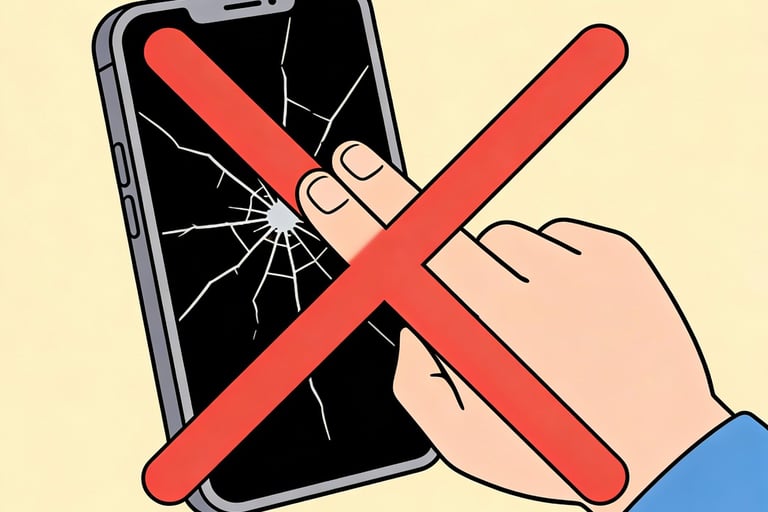
When buying a used iPhone, screen selection is a balance between "budget" and "experience"—original screens are reliable but expensive, third-party screens are cheap but high-risk, and used original screens offer high cost-effectiveness but require identification. As a buyer, you need to clarify the advantages, pitfalls, and suitable scenarios of different screen types based on your budget and usage cycle to select the "most cost-effective" screen and avoid wasting money.
First, Clarify: 3 Main Types of Screens in the Second-Hand Market
(Basic Knowledge Must-Know for Buyers)
Used iPhone screens are mainly divided into "original screens, used original screens, and third-party screens". The three differ greatly in quality, price, and risk. Understand them first before making a selection:
Original Screen (Factory-Fitted)
Core Definition: Produced by Apple, never replaced, consistent with the phone’s factory configuration.
Source Channel: The phone has never had its screen replaced; original factory-fitted.
Quality Stability: ★★★★★
Price Range (Taking iPhone 13 as Example): No additional cost (included in the overall phone price); a perfect-condition used screen is 800-1500 RMB more expensive than a defective one of the same model.
Core Advantages: 100% compatible with all functions (True Tone, Face ID, etc.), long service life (2-3 years).
Risks for Buyers: Almost no risk, only need to check for hidden faults (e.g., slight burn-in).
Used Original Screen
Core Definition: Original screen removed from a normally used old iPhone in good condition.
Source Channel: Disassembled and recycled from used iPhones, or original screens replaced during official repairs.
Quality Stability: ★★★★☆
Price Range: Separate purchase price: 500-1200 RMB (40% cheaper than official new screens); used original screens are 300-800 RMB cheaper than perfect ones.
Core Advantages: Retains original quality, full compatibility, cost-effective.
Risks for Buyers: Need to check for hidden faults (e.g., slight backlight aging, cable damage); some used original screens may have defects (scratches, etc.).
Third-Party Screen
Core Definition: Not produced by Apple, imitated by third-party manufacturers (divided into first-tier brands/no-name).
Source Channel: Third-party repair shops, e-commerce platforms, resold by sellers or repairers.
Quality Stability: First-tier brands: ★★★★☆; No-name: ★★☆☆☆
Price Range: First-tier brands: 300-800 RMB; No-name: 200-500 RMB; Used phones with third-party screens are 500-1200 RMB cheaper than those with original screens.
Core Advantages: Low price, meets basic needs for short-term use, cost-effective.
Risks for Buyers: Poor compatibility (e.g., "fake True Tone", touch delay), short service life (6-12 months); no-name screens have safety hazards (e.g., screen bulging due to battery swelling).
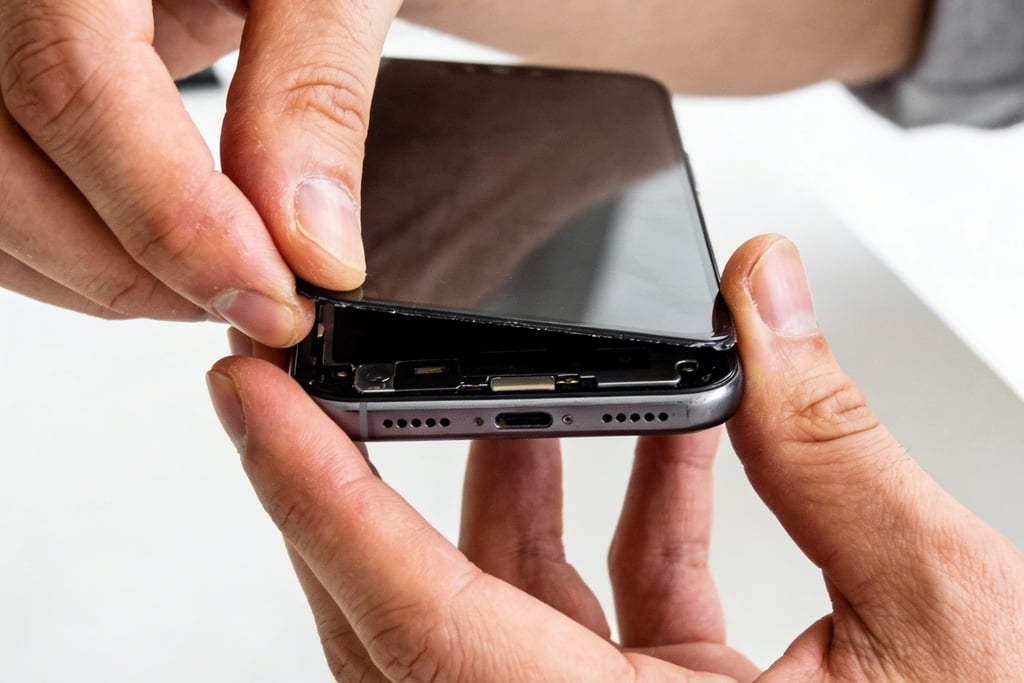
Buyer’s Selection Decision: Choose the Optimal Screen Based on Budget + Usage Cycle
(Precise Matching for 3 Scenarios)
As a buyer, there’s no need to blindly pursue "original screens". Selecting based on your budget and usage plan is the most cost-effective:
(I) Sufficient Budget (3000+ RMB for Used Phones) + Long-Term Use (1-2 Years): Prioritize "Original Screens/Used Original Screens"
• Core Needs: Complete functions, stable quality, high retention rate, avoid subsequent maintenance troubles;
• Selection Points:
a. First Choice: "Original Screen (Never Replaced)":
▪ Identification Method: Test with Aisi Assistant, which shows "Original Screen" and matches the screen serial number with the phone; ask the seller for purchase vouchers and repair records to confirm no screen replacement history;
▪ Pitfall Avoidance: Be wary of sellers passing off "assembled screens as original". Must complete all tests in Tweet 32 (especially True Tone, touch, and burn-in tests);
▪ Bargaining Space: If the original screen has slight superficial scratches (no tactile feel), request a 5%-10% discount (e.g., original phone price 4000 RMB, can be reduced to 3600-3800 RMB).
a. Second Choice: "95% New Used Original Screen":
▪ Identification Method: Request the seller to provide a test report for the used original screen (no burn-in, no dead pixels); observe the screen condition (no scratches, intact oleophobic coating); test function compatibility (normal True Tone, touch, and Face ID);
▪ Pitfall Avoidance: Reject "used original screens + assembled cables" (non-original cables cause unstable touch); avoid purchasing "used screens from water-damaged phones" (potential internal corrosion);
▪ Suitable Scenarios: Budget is 300-500 RMB less than a perfect original screen, and you can accept no official warranty for the screen (ask the seller to promise "refundable price difference for screen function failures within 3 months").
• Buyer’s Script Template: "My budget is around 4000 RMB, and I want to use it for 1-2 years. I only consider original screens or 95% new used original screens. They must support True Tone and Face ID, with no burn-in or touch failure. I can confirm the purchase immediately if you can provide a test report."
(II) Medium Budget (2000-3000 RMB for Used Phones) + Short-Term Use (6-12 Months): Optional "First-Tier Brand Third-Party Screens"
• Core Needs: High cost-effectiveness, normal basic functions, no maintenance required in the short term;
• Selection Points:
a. Recognize First-Tier Third-Party Brands (e.g., Pisen, UGREEN, Baseus):
▪ Identification Method: Check the screen packaging/seller-provided brand certificates (avoid no-name brands pretending to be first-tier); test core functions (normal touch and display, True Tone support);
▪ Core Advantages: More stable than no-name screens, supports 1-year warranty (some brands offer offline store warranty), no obvious shortcomings in basic functions;
▪ Pitfall Avoidance: Reject "third-party screens without brand logos" (most likely no-name with high failure rates); focus on checking display discoloration during testing (first-tier brands have low discoloration probability, while no-name brands generally have discoloration).
a. 3 Must-Do Tests (Avoid Pitfalls):
▪ Touch Test: Type continuously for 5 minutes, test edge touch and quick sliding for no touch failure or delay;
▪ Display Test: Open high-definition pictures and videos to observe color reproduction (no obvious bluish/yellowish tint);
▪ Stability Test: Use continuously for 30 minutes (playing games, watching videos) to observe if the screen heats up severely or flickers.
• Buyer’s Script Template: "My budget is 2500 RMB, and I plan to use it for about 1 year. I accept first-tier brand third-party screens (like Pisen or UGREEN), but they must have no discoloration or touch failure. I can make the deal if you can provide brand warranty certificates and the price is reasonable."
(III) Limited Budget (<2000 RMB for Used Phones) + Temporary Transition (<6 Months): Cautiously Choose "No-Name Third-Party Screens"
• Core Needs: Low price, meets basic display/touch needs, only for transitional use;
• Selection Points:
a. Lower Expectations, Focus on Checking for "Serious Faults":
▪ Must-Test Items: No burn-in, no large-area cracks, no touch failure in core areas (e.g., screen center), no hidden liquid ingress;
▪ Pitfall Avoidance: Do not require full function integrity (e.g., True Tone may be missing), but must ensure "no impact on daily use" (normal typing, short video browsing, navigation);
▪ Price Bottom Line: Phones with no-name third-party screens should be 200-300 RMB cheaper than those with first-tier third-party screens of the same configuration (e.g., original price 2000 RMB, can be reduced to 1700-1800 RMB).
a. Agree on After-Sales in Advance:
▪ Ask the seller to clearly state "if the screen has serious faults (e.g., touch failure, black screen) within 1 month, a 200-300 RMB price difference refund is available";
▪ Keep transaction vouchers to avoid lack of evidence for subsequent rights protection.
Buyer’s Script Template: "My budget is 1800 RMB, and I only need it for a temporary transition of 3-6 months. I accept no-name screens, but they must have no burn-in or touch failure in the central area and ensure basic use. A price difference refund is required if serious faults occur within 1 month."
4 Screen Selection Mistakes Buyers Must Avoid
(90% of People Will Fall for Them)
1. Mistake 1: "Original screens are definitely better than third-party screens"
• Correction: If an original screen has serious faults like burn-in or hidden liquid ingress, it is worse than a fully functional first-tier brand third-party screen. The core of selection is "no faults", not just "whether it’s original".
• Pitfall Avoidance: Complete hidden fault tests first, regardless of whether it’s original, before considering the type.
2. Mistake 2: "Third-party screens are all unreliable; never buy them"
• Correction: First-tier brand third-party screens have been market-verified, with stable quality and high cost-effectiveness, suitable for buyers using them short-term. Blindly pursuing original screens may exceed the budget or result in buying a faulty original screen.
• Pitfall Avoidance: Decide based on the usage cycle. There’s no need to insist on original for short-term use; focus on normal functions.
3. Mistake 3: "Used original screens are refurbished screens; cannot buy"
• Correction: Used original screens are "original screens removed from intact phones", essentially retaining original quality. As long as they are fault-free and in good condition, they are the most cost-effective choice. Refurbished screens are "fault-repaired screens", which are completely different.
• Pitfall Avoidance: When purchasing used original screens, ask the seller for a "no repair, no fault" commitment and test screen parameters with tools.
4. Mistake 4: "As long as the screen can display and touch, it’s fine"
• Correction: The core risk of used screens is "hidden faults" (e.g., burn-in, hidden liquid ingress). These issues do not affect use in the short term but will suddenly deteriorate later with high repair costs.
Pitfall Avoidance: Regardless of the screen type, must complete the 5 core tests in Tweet 32—none can be skipped.
Final Buyer’s Selection Checklist
(Must Verify On-Site/After Receipt)
1. Screen Type Confirmation: Original/used original/third-party screen (consistent with seller’s description);
2. Appearance Inspection: No cracks, no deep scratches, no edge watermarks, tight fit;
3. Function Testing: Sensitive touch, no burn-in/dead pixels, normal True Tone (for supported models), normal Face ID (for supported models);
4. Tool Verification: Aisi Assistant shows matching screen parameters with no abnormalities;
After-Sales Agreement: Clarify return/refund rules for screen faults, and keep chat records and vouchers.